
For Religious Trauma, Spiritual Abuse, & Faith Deconstruction
Religious Trauma Therapy in Seattle, Washington

On Paper, You’ve Moved On From Church & Religion
You live in one of the least religious cities in the country. You work in tech, vote progressive, haven't set foot in a church in months. Your coworkers and friends don’t talk about religion.
And yet… you still feel your stomach drop when you hear a religious song in a coffee shop. You still carry shame when you make a choice your parents would disapprove of. You intellectually reject every doctrine you were raised with, and you still panic at 3am wondering if hell is real.
The people around you in Seattle don’t understand why you're still affected by something you left behind. They didn't grow up with eternal damnation wired into their nervous system. They don't know what it's like to have your entire identity, community, and sense of purpose wrapped up in one belief system, and then watch it crack.
Maybe the crack started when you watched your church choose political power over compassion. Maybe it was a pandemic that revealed who your community really was. Maybe it was watching leaders get protected while victims were silenced, and realizing the entire system was designed to protect itself.
Or maybe it hit closer to home:
Your LGBTQ+ friend being told they were condemned to hell
Your own assault, and being told to forgive and move on
Your child came out, and you had to choose between your faith and your kid
Whatever broke the seal, you can't unsee it. You've done the intellectual work. You've read the deconstruction books, listened to the podcasts, analyzed the doctrine. You know what you don't believe anymore.
But knowing isn't the same as healing. And that's the part nobody in your secular Seattle life understands.
You Left Your Religion, But the Anxiety, Guilt, and Shame Came With You
You've probably spent months or years in your head, thinking your way through this. But religious trauma doesn't just live in your beliefs. It lives in your body.
Research shows that 27-37% of people who leave high-control religions experience symptoms that mirror PTSD. The combination of authoritarian control and fear-based theology creates real, physiological trauma.
For my Seattle clients who have already made the intellectual break, the symptoms often look like:
Numbness and disconnection. You've been living in your head for so long that you've lost access to your body. Feelings, desire, intuition - these weren't safe. They were sinful. So you learned to override them. Now you don't know what you actually feel or want.
Intellectualization as a defense. You can analyze your religious upbringing brilliantly. You can explain exactly what was wrong with the theology. But when someone asks how you feel about it, you go blank. The analysis is a way to stay safe from the grief underneath.
Chronic tension you’ve normalized. Your shoulders, your jaw, your gut. Your body has been holding the pressure of trying to be perfect for decades. You might not even notice it anymore because it's just how you feel.
Panic that doesn’t match your beliefs. You don't believe in hell. You still wake up terrified. You don't think skipping church is a sin. Your heart still races when you sleep in on Sunday. The fear is in your nervous system, not your intellect.
Shame that surfaces in your closest relationships. You're fine at work, fine with friends. But in intimate moments, with your partner, in your own skin - the old messages come flooding back. Your body is shameful. Your desires are dangerous. You can't be trusted.
If you grew up in purity culture, the disconnection runs even deeper.
Research on 20,000 women from evangelical backgrounds found that 22.6% experience vaginismus or sexual dysfunction, a direct result of teachings that framed the body as shameful and sexuality as dangerous.
You might have shame around your sexuality that makes intimacy painful or frightening, confusion about what you actually want because you were taught your desires were sinful, or an inability to trust your body’s signals because it was framed as something to control and suppress.
This is a specific type of religious trauma that doesn’t heal just because you’ve stopped believing.
Learn more about my approach to religious trauma and faith deconstruction therapy here.

Seattle-Based Religious Trauma Therapy That Goes Beyond Intellectual Processing
I know the world you came from because I came from it, too.
I grew up immersed in the traditional Christian faith. I understand what it means to have your entire social life, sense of purpose, and morality wrapped up in one belief system. And I know what it feels like when that foundation cracks.
You won’t need to explain what youth group is, why purity culture still affects you, or what it means to lose your eternal family.
My role as your therapist is not to tell you what to believe or not believe. Some clients come to me knowing exactly where they stand. Others are still figuring it out and that process feels disorienting and lonely. Either way, we work with what is happening in your body: the guilt, the hypervigilance, the shame, the grief, so that it stops running the show when you’re trying to make a decision, have a conversation, or just get through a holiday dinner.
We work with your body, not just your thoughts
I use a combination of EMDR, somatic therapy, and Emotionally Focused Therapy (EFT).
In plain terms, EMDR helps your brain reprocess memories and experiences that are still triggering strong reactions even though they happened years ago. Somatic therapy works with what's happening in your body, because a lot of what you're carrying from religion doesn't live in your thoughts, it lives in your tight shoulders, your shallow breathing, your stomach dropping when you get a text from your parents. And EFT helps you understand and change the emotional responses that show up in your closest relationships, the ones that religious upbringing tends to wire in deep.
A lot of my Seattle clients come in saying something like, “I know this guilt doesn't make sense anymore, but I still feel it everywhere.” That gap between what you know and what you feel is exactly what this work addresses. We get into the physical reactions, the knee-jerk guilt and shame, and the ways you learned to relate to the people closest to you inside a religious environment, so you can start operating from what you actually believe and want now, not from what was trained into you.

Specialized Support for Seattle Clients
Purity Culture & Sexual Disconnection
Many Seattle clients come to me because they've done years of intellectual work on deconstruction but still feel a sense of shame and disconnection in their body during sex.
The religious trauma from purity culture runs deep. Beyond the shame and guilt, there’s often real physical dysfunction: pain during sex, inability to experience pleasure, a sense that your body isn’t really yours.
I have extensive training in somatic therapy specifically for this work, including certifications in somatic approaches to healing sexual trauma, body-based therapy for attachment wounds, and working with trauma stored in the body.
Your Marriage Is Struggling Because of Your Faith Shift
When one partner deconstructs it can feel like you're living with a stranger.
I'm trained in Emotionally Focused Therapy (EFT) for couples. I can help you navigate the grief of losing shared beliefs, communicate across the divide without constant conflict, rebuild emotional and physical intimacy, and decide together what your relationship looks like going forward.
Harm from “Progressive” Spiritual Communities
Not all religious trauma in Seattle comes from conservative evangelical churches. Some of the most confusing spiritual harm happens in communities that marketed themselves as progressive, open-minded, or alternative.
Maybe you were part of a yoga community or wellness circle where the teacher used spiritual bypassing to avoid accountability. You were told you "manifested" your own trauma.
Maybe you attended a progressive church with a charismatic pastor who turned out to be manipulative, narcissistic, or abusive - all hidden behind social justice language.
These experiences are harder to name as harmful because the packaging was gentler. But the manipulation was real, the harm was real, and the confusion you feel now is real.
I work with Seattle clients healing from spiritual bypassing and toxic positivity, new age communities that used manifestation beliefs to control, progressive churches with abusive leadership, and the particular gaslighting that comes when harm happens in a community that claims to be “evolved.”

In Religious Trauma Therapy, I’ll Help You:
Access emotions that have been locked away so that you can feel and express anger when someone crosses a boundary, cry when you need to cry, and stop the numbness that has kept you disconnected from your own life.
Release the stored tension from years of trying to be "good enough" so that you can sleep through the night, have pleasurable sex without pain or shame, and stop living with chronic digestive issues or unexplained physical symptoms.
Reconnect with your intuition and what's important to you so that you can make decisions about your career, relationships, or where to live without three months of agonizing deliberation or needing someone else's permission.
Process the grief of losing your community, identity, and the future you thought you'd have so that you can build new friendships, find new sources of meaning, and stop feeling stuck in limbo between your old life and whatever comes next.
Handle the 3am fear so that the "what if hell is real?" question stops waking you up, and you can live your life without the constant anxiety that you're making a catastrophic mistake.
Set boundaries with religious family so that you can attend (or skip) family gatherings without guilt, respond to proselytizing without shutting down, and protect your kids from the same harmful teachings you grew up with.
Rebuild your sense of self beyond "the good Christian" so that you know who you are when you're not performing for others, and can answer "what do you believe?" without freezing.
Build a new foundation based on your values so that you can raise your kids differently, choose work that actually matters to you, and build relationships based on honesty instead of fear.
Online Religious Trauma Therapy for Seattle Residents
I provide telehealth religious trauma therapy to clients throughout Seattle and all of Washington.
Whether you're in Capitol Hill, Ballard, Fremont, Queen Anne, West Seattle, or anywhere else in the city, you can work with me from home.
For many Seattle residents who left conservative religious communities, telehealth offers privacy. You don't have to worry about running into someone from your former church in a waiting room.
I see clients via telehealth on Tuesdays and Wednesdays between 8am-6pm. I also offer in-person sessions on Mondays at my Bothell office through summer 2026.
Serving Seattle and Surrounding Areas:
Shoreline, Lynnwood, Burien, Renton, Kent, Federal Way, West Seattle, Tukwila, SeaTac, Everett, Bremerton, and all of King County. Also serving clients in Bellevue and on the Eastside.
Schedule Your First Session
Schedule Your First Session
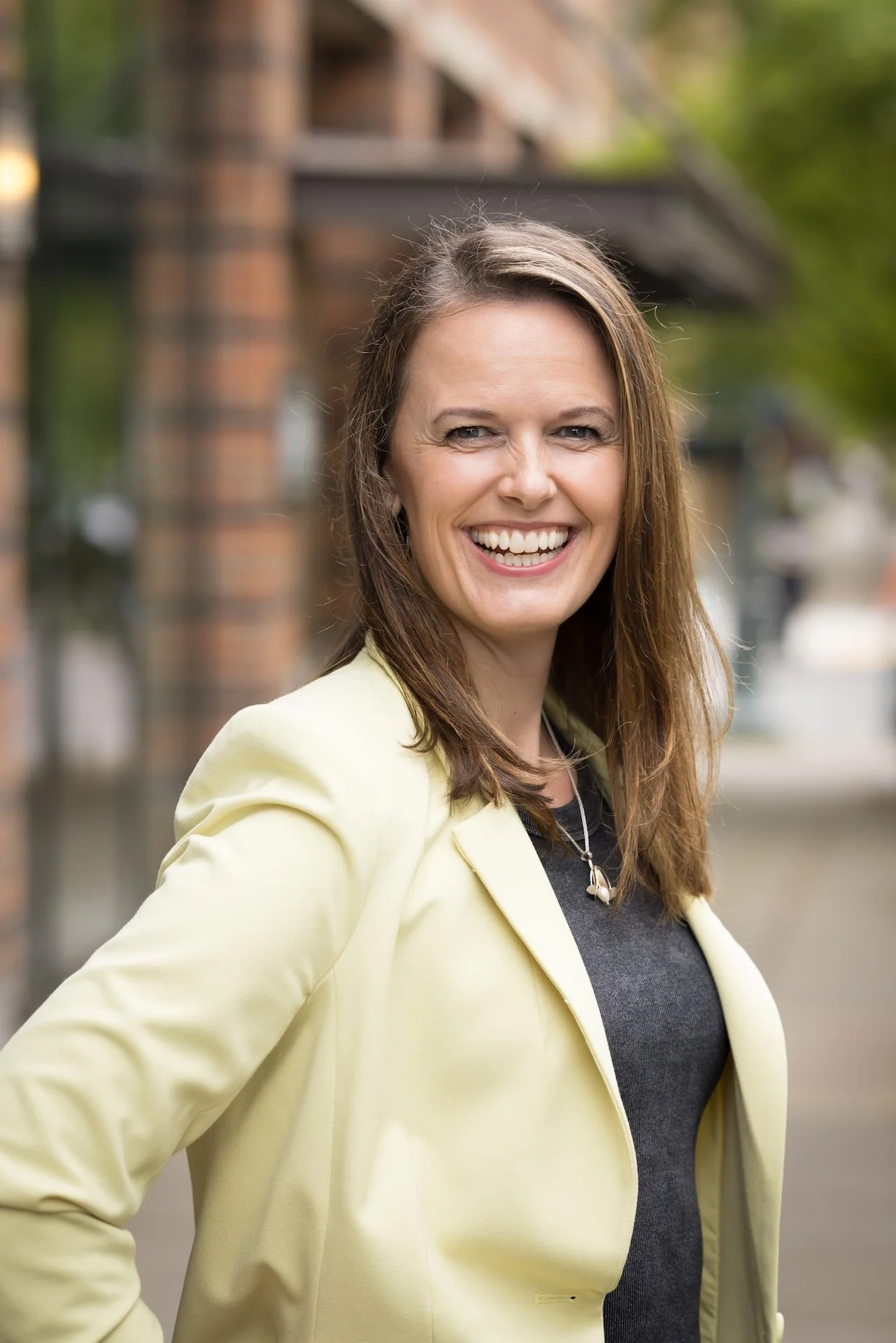
About Ingrid Johnston, LMFT, MDFT
Seattle religious trauma therapist
I’ve been working with individuals and couples since 2014, with specialized training in trauma, somatic therapy, and faith transitions. I hold a Master of Science in Marriage and Family Therapy and advanced certification in Medical Family Therapy and Collaborative Medicine from Seattle Pacific University.
My approach integrates EMDR, somatic therapy, and Emotion-Focused Therapy (EFT), evidence-based modalities specifically effective for religious trauma and complex PTSD. I’ve completed over 100 hours of specialized training in trauma treatment and body-based healing.
Beyond my clinical training, my work is informed by my own lived experience. I grew up immersed in traditional Christian faith. I’ve navigated my own path through chronic pain, somatic healing, and decades of mindfulness and meditation practices. I understand what it's like to rebuild trust in your body and intuition after being taught they couldn’t be trusted.
I’m a member of the American Association for Marriage and Family Therapy (AAMFT) and the Washington Association for Marriage and Family Therapy (WAMFT).
Licensed Marriage and Family Therapist: Washington State License #LF61033631
Get In Touch
Contact Ingrid
Please complete the form, and I will be in touch within 48 business hours.
Office and mailing address:
19803 North Creek Parkway, Suite 205
Bothell, WA 98011
In-person in Bothell & online across Washington