
In-Person in Bothell and Online Throughout Washington
Therapy for Religious Trauma and Faith Deconstruction
You Were a “Good” Christian.
Now You Aren’t Sure Who You Are Anymore.

Something in your faith foundation cracked along the way.
Maybe it was watching your church choose political power over compassion during an election cycle or a pandemic. Maybe it was realizing your church cared more about control than protecting the vulnerable.
Maybe the betrayal went deeper than one incident:
You watched the pattern play out: leaders were protected over victims, NDAs silencing people who came forward, boards choosing institutional reputation over truth. You saw victims attacked for “tearing down the ministry” while the abusive pastor moved to another church and started over.
You watched people defend the indefensible and call it “God’s will.”
The cognitive dissonance wasn’t just about one scandal. It was watching your community gaslight you in real-time, insisting you saw it wrong, that you weren’t being gracious enough, that the leader was still “anointed” despite the evidence to the contrary.
The breaking point wasn’t just discovering one pastor did something wrong. It was realizing that the entire system is designed to protect itself, not the people it claims to serve. And that realization made you question everything you had been taught about discernment, truth, and whether you could trust your own judgment.
Perhaps it hit you even closer to home:
Your LGBTQ+ friend being told they were condemned to hell
Your own sexual assault, and being told to forgive and move on
The miscarriage you were told was “God's will”
Your child came out, and you had to choose between your faith and your kid
Whatever broke the seal, you can’t unsee it. The contradictions are everywhere and you’re questioning things you never thought you’d question.
Now you’re left with an uncomfortable truth: the life blueprint your religion handed you doesn’t match your reality.
You’re not just changing your beliefs. You’re losing your entire framework for understanding the world.
Your identity is dissolving. You were “the good Christian kid,” and you built your life on that foundation. You did everything you were “supposed” to do: Sunday school, youth group, mission trips, leading worship, or small groups. You believed with your whole heart. Now, when someone asks what you believe, you freeze because you genuinely don’t know. Without that identity, who are you?
The isolation is crushing. These weren’t just church friends; they were your entire social network, the people who showed up when you got married, had a baby, lost someone. But now there’s this invisible wall. You can’t say what you really think or ask the questions you’re really wondering.
The guilt is relentless. Every time you skip church, every time you doubt a teaching: What if I’m wrong? What if I’m being rebellious? What if hell is real and I’m making the biggest mistake of my existence? Even when you’re pretty sure you don’t believe anymore, the fear still lives in your body.
And underneath it all: the grief. You’re mourning a version of yourself that no longer exists, the certainty you used to have, and the future you thought was guaranteed: the one where everything made sense, where your family stayed intact, where you knew your purpose.
You feel profoundly alone, because how do you explain religious trauma and faith deconstruction to someone who hasn’t been through it?

Your Body Won’t Let You Forget
Religious trauma doesn’t just live in your thoughts. It lives in your nervous system.
Research shows that 27-37% of people who leave high-control religions experience symptoms that mirror PTSD. This is because the combination of authoritarian control and fear-based theology creates real trauma.
You might notice:
Panic when you break an old rule, even one you don’t believe in anymore. You skip church, say a curse word, or make a choice you were taught was wrong, and your heart races like you’ve done something dangerous.
Shutting down during conflict. You were taught not to question authority, not to trust your anger, and to submit. Now, when someone crosses a boundary, you go silent.
An edginess that won’t turn off. You’re constantly scanning: Did I say the wrong thing? Did I give myself away? Are they judging me?
Physical symptoms with no medical explanation. Chronic pain, digestive issues, tension in your shoulders. Your body has been holding the pressure of trying to be perfect for years, maybe decades.
Numbness. You’ve disconnected from your body because feelings, desire, and intuition weren’t safe. They were sinful. You learned to live entirely in your head, and now you don’t know how to access your emotions.
If you grew up in purity culture, the body disconnection runs even deeper.
Research on 20,000 women from evangelical backgrounds found that 22.6% experience vaginismus or sexual dysfunction, a direct result of teachings that framed the body as shameful and sexuality as dangerous. You might have:
Shame around your own sexuality that makes intimacy painful or frightening
Confusion about what you actually want because you were taught your desires were sinful
Inability to trust your body’s signals because it was framed as something to control and suppress
This is a specific type of religious trauma. It happens when you grow up in an environment that taught you to override your instincts, ignore your needs, and distrust yourself.

Trauma & Somatic Therapy That Understands the Religious Culture You Came From
I know the world you came from because I came from it, too.
I grew up immersed in the traditional Christian faith. So I understand what it means to have your entire social life, sense of purpose, and morality wrapped up in one belief system. And, I know what it feels like when that foundation starts to crack.
You won’t need to explain what youth group is, why purity culture still affects you, or what it means to lose your eternal family. I already understand the specifics of the culture you’re leaving.
My role as your therapist isn’t to tell you what to believe. It’s to help you find your own voice, trust your own judgment, and build a life that belongs to you.

What we’ll do together
Religious Trauma Therapy Helps You Build a Life That is Genuinely Yours
We Start With Your Body, Not Just Your Thoughts
You’ve probably spent months or years in your head: reading deconstruction books, listening to podcasts, analyzing doctrine, trying to think your way to clarity. And that’s important work.
But here’s the thing: religious trauma doesn’t just live in your beliefs. It lives in your body: the tightness in your chest when someone mentions God or church, the way you hold your breath when you're about to say something honest, the exhaustion from decades of hypervigilance.
I use EMDR (Eye Movement Desensitization and Reprocessing), somatic therapy, and Emotion-Focused Therapy (EFT). These therapies are evidence-based approaches specifically recommended for processing the kind of trauma that comes from high-control religious environments.
In Our Work Together, I’ll Help You:
Notice what’s happening in your body when old beliefs or fears surface so that you can speak up in conversations with family instead of freezing, and stop the panic attacks that hit when you break an old rule.
Release the stored tension from years of trying to be “good enough” so that you can sleep through the night, have pleasurable sex without pain or shame, and stop living with chronic digestive issues or unexplained physical symptoms.
Reconnect with your intuition and what’s important to you so that you can make decisions about your career, relationships, or where to live without three months of agonizing deliberation or needing someone else’s permission.
Process the grief of losing your community, identity, and the future you thought you’d have, so that you can build new friendships, find new sources of meaning, and stop feeling stuck in limbo between your old life and whatever comes next.
Access emotions that have been locked away so that you can feel and express anger when someone crosses a boundary, cry when you need to cry, and stop the numbness that has kept you disconnected from your own life.
Navigate mixed-faith marriage dynamics so that you and your spouse can talk about your differences without it turning into a fight, and rebuild intimacy even when you don’t share the same beliefs anymore.
Set boundaries with religious family so that you can attend (or skip) family gatherings without feeling guilty, respond to proselytizing without shutting down, and protect your kids from the same harmful teachings you grew up with.
Rebuild your sense of self beyond “the good Christian” so that you know who you are when you’re not performing for others, and can answer “what do you believe?” without freezing in panic.
Work through purity culture trauma so that you can experience your body as yours (not shameful, and not an object to control), enjoy physical intimacy, and make choices about your sexuality based on what you actually want.
Handle the 3am fear so that the “what if hell is real?” question stops waking you up, and you can live your life without the constant anxiety about whether leaving the church is a catastrophic mistake.
Build a new foundation based on your values so that you can raise your kids differently, choose work that actually matters to you, and build relationships based on honesty instead of fear or obligation.
Specialized Support for Specific Religious Experiences
01. Purity Culture Trauma
The religious trauma from purity culture runs deep. Beyond the shame and guilt, there’s often real physical dysfunction: pain during sex, inability to experience pleasure, disconnection from your body, etc.
I have extensive training in somatic therapy, specifically for this work, including certifications in:
Somatic approaches to healing sexual trauma
Body-based therapy for attachment wounds
Working with trauma stored in the body
This isn’t therapy about your body. This is actual work with your body to help you reconnect, release shame, and rebuild trust in your own physical experience and desires.
02. Your Marriage Is Struggling Because of Your Faith Shift
When one partner deconstructs and the other doesn’t, it can feel like you’re living with a stranger. The shared foundation you built your relationship on is gone, and you don't know how to bridge the gap.
I’m trained in Emotion-Focused Therapy (EFT) for couples, an evidence-based approach that helps you get underneath the surface arguments to the real emotions driving them, so that you can reconnect and feel emotionally safe with each other again.
I can help you:
Navigate the grief of losing shared beliefs
Communicate across the divide without constant conflict
Rebuild emotional connection even when your beliefs differ
Decide together what your relationship can look like going forward
03. Adverse Religious or Spiritual Experiences in “Progressive” or New Age Communities
Not all religious trauma comes from conservative evangelical churches. Some of the most damaging spiritual experiences happen in communities that marketed themselves as progressive, open-minded, or alternative.
Maybe you were part of a yoga community, wellness circle, or new age group where the teacher used spiritual bypassing to avoid accountability. You were told you “manifested” your own trauma, pain, or illness.
Maybe you attended a progressive church with a charismatic pastor who turned out to have narcissistic traits, used emotional manipulation, or created a culture where staff and volunteers were exploited.
These experiences are often harder to name as harmful because the language was gentler, the community seemed more accepting, and there wasn’t the obvious control of fundamental religion.
Still, the manipulation was real, the harm was real, and the confusion you feel now about what happened is real.
I work with people who have experienced:
Spiritual bypassing and toxic positivity that blamed you for your circumstances
New age communities that used manifestation beliefs to manipulate and control
Progressive churches with abusive leadership hidden behind social justice language
The particular gaslighting that comes when harm happens in a community that claims to be “evolved” or “enlightened”
Rebuilding trust in your intuition after being told you weren’t spiritual enough to understand
This is a great fit for you if…
You’re willing to feel uncomfortable emotions instead of just talking about them intellectually. Therapy will ask you to experience your grief, anger, and fear, not just analyze the emotion.
You can commit to weekly or biweekly sessions for at least 3-6 months. Religious trauma healing isn’t a quick fix.
You want more than symptom management; you’re not just looking to “cope better,” you’re willing to fundamentally change how you relate to yourself.
This is not the best fit for you if…
You want someone to use scripture or prayer in therapy. My approach is secular and evidence-based; I won't incorporate religious practices into our sessions. That said, I understand all the religious practices you grew up with and how they can feel difficult to know how to relate with or interact with now. They were coping skills that may no longer serve you the same way, and we can work through that.
You need your therapist to be openly and actively religious. I'm not going to model Christian faith, attend church, or tell you my current beliefs, though I respect clients who choose to reconstruct their beliefs and will work with you to find your own solid footing with how you want to live and believe moving forward. In fact, helping clients reconstruct and develop a new spiritual identity, if they want to, is something I genuinely enjoy as part of my work.
You only want to intellectually process. If you’re not willing to explore body sensations, emotions, or slow down from constant analysis, this approach won’t work.
Online Religious Trauma Therapy for Washington Residents
I work with clients navigating religious trauma and faith deconstruction across Washington, including in Seattle, Bellevue and the Eastside, Tacoma, Vancouver, and Spokane.
For many clients who left conservative religious communities, telehealth offers privacy. You don't have to worry about running into someone from your former church in a waiting room.
I see clients via telehealth on Tuesdays and Wednesdays between 8am-6pm. I also offer in-person sessions on Mondays at my Bothell office through summer 2026.

Get started in Religious Trauma Therapy today
You’re ready to make sense of your past religious or spiritual experiences and figure out who you are now. I can help.
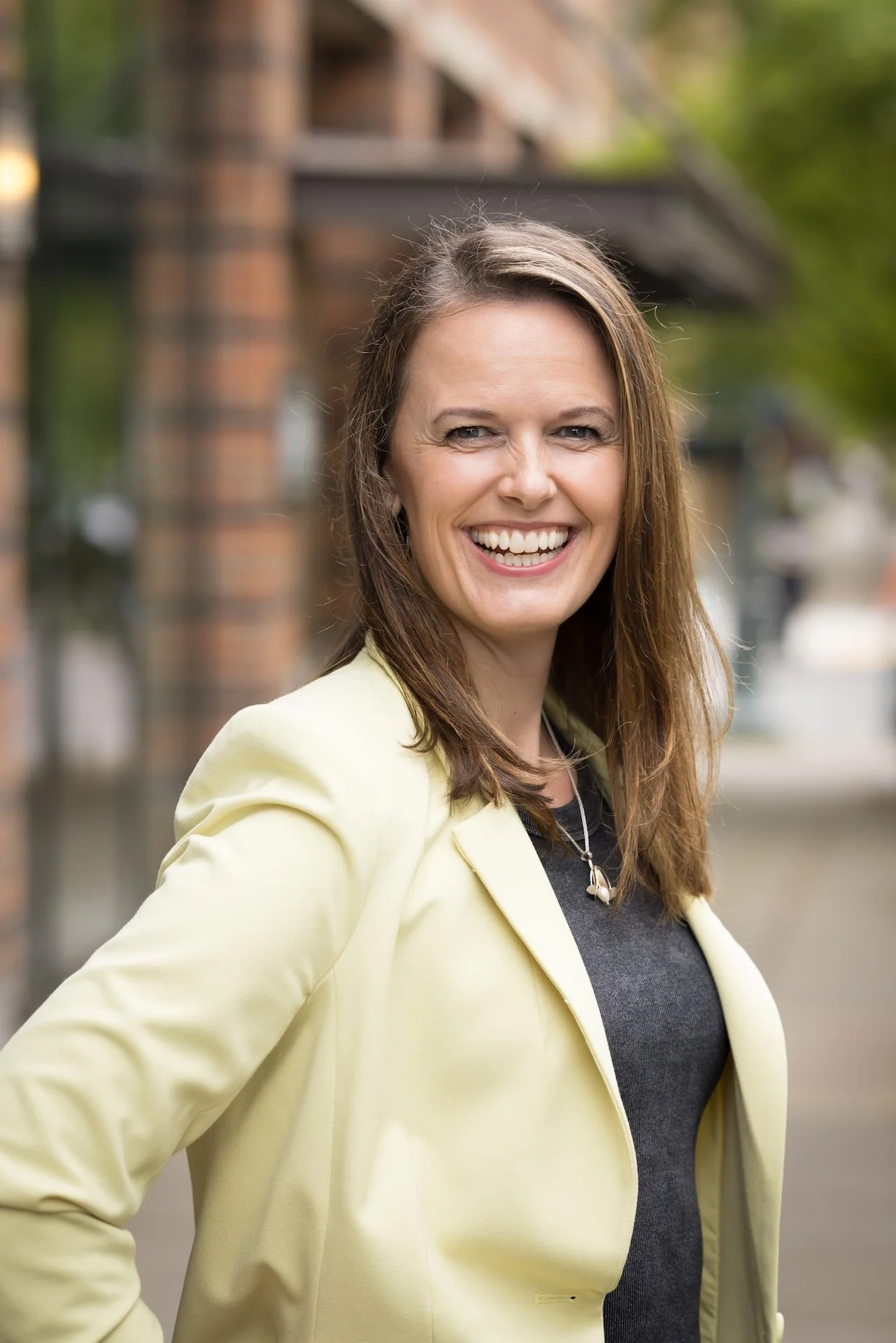
About Ingrid Johnston, LMFT, MDFT
Religious trauma therapist
I’ve been working with individuals and couples since 2014, with specialized training in trauma, somatic therapy, and faith transitions. I hold a Master of Science in Marriage and Family Therapy and advanced certification in Medical Family Therapy and Collaborative Medicine from Seattle Pacific University.
My approach integrates EMDR, somatic therapy, and Emotion-Focused Therapy (EFT), evidence-based modalities specifically effective for religious trauma and complex PTSD. I’ve completed over 100 hours of specialized training in trauma treatment and body-based healing.
Beyond my clinical training, my work is informed by my own lived experience. I grew up immersed in traditional Christian faith. I’ve navigated my own path through chronic pain, somatic healing, and decades of mindfulness and meditation practices. I understand what it's like to rebuild trust in your body and intuition after being taught they couldn’t be trusted.
I’m a member of the American Association for Marriage and Family Therapy (AAMFT) and the Washington Association for Marriage and Family Therapy (WAMFT).
Licensed Marriage and Family Therapist: Washington State License #LF61033631
-
That’s completely valid. Some people find religion and spirituality deeply helpful and beneficial. If that was your experience, I’m not here to change your beliefs. My focus is helping you process what harmed you, distinguish between what was damaging and what might still hold meaning for you, and build something authentic moving forward, whether that includes spirituality/religion or not.
-
Most clients work with me for about a year. Religious trauma isn't something you “fix” in 6-8 sessions; it’s identity reconstruction, grief work, and nervous system rewiring. Some clients need less time, some need more. We’ll work together until you feel grounded, confident, and equipped to move forward on your own.
-
The first session is about getting to know each other and determining if we’re a good fit. I’ll ask about what’s bringing you in, your religious/spiritual background and how it’s affecting you now, your family history and current relationships, and your health history. I’ll also give you a taste of how I work, usually by asking what you’re noticing in your body as we talk. This helps you experience the somatic approach firsthand so that you can decide if it resonates.
-
For individual therapy, we typically meet weekly or biweekly depending on your needs and goals. We’ll decide together what frequency makes sense.
For couples therapy, I require weekly sessions for the first three months because this is what the research shows creates lasting change in relationships. After that initial period, we can discuss moving to biweekly if appropriate.
-
No. I offer a paid initial session instead so we both get a real sense of what it’s like to work together. I’ve found that I can offer more assessment, referrals, resources, and feedback in one hour than I can in a 15-minute phone call, whether we continue treatment together or not. A full session gives us both the information we need to make a good decision.
My website is designed to give you a clear picture of my approach. If you have questions not answered here, reach out via the contact form and I’m happy to answer by email.
-
I charge $300 for individual sessions and $350 for couples sessions (55 minutes). All sessions beyond 55 minutes are prorated by the hour.
-
I don’t accept insurance.
However, I can provide a superbill that you can submit to your insurance for potential out-of-network reimbursement if you're seeing me individually. Many insurance companies reimburse 50-80% after you’ve met your deductible.
-
Please notify me within 48 hours if you’re unable to attend a session. If you don’t cancel within 48 hours, you’ll be charged my full fee. Exceptions are illness or life-threatening emergency.
If you’re my final session of the day, I reserve the right to leave if you’re over 15 minutes late without contact. Standard sessions are 55 minutes. If you arrive late but have let me know, you’ll be seen for the remaining time and charged the full fee.
-
I’m only licensed to see clients who are physically located in Washington State during our sessions. If you’re temporarily out of state, we’ll need to pause therapy until you return. If you’re moving permanently, I can provide referrals to therapists in your new location.
-
I see clients via telehealth on Tuesdays and Wednesdays between 8am-6pm, serving clients throughout Washington State. I also offer in-person sessions on Mondays at my Bothell office, but I’m only taking new in-person clients through summer 2026. After that, my practice will be fully online.
-
You have two options:
Schedule directly using my online calendar (through SimplePractice, which is secure and HIPAA-compliant)
Fill out a contact form and I'll respond personally within 1-2 business days
Once we schedule, I'll send you an email with links to electronically sign my disclosure statement, informed consent, telehealth consent, HIPAA privacy statement, and intake form through SimplePractice.
Get In Touch
Contact Ingrid
Please complete the form, and I will be in touch within 48 business hours.
Office and mailing address:
19803 North Creek Parkway, Suite 205
Bothell, WA 98011
In-person in Bothell & online across Washington