
Counseling For Religious Trauma, Purity Culture, Spiritual Abuse, & Faith Deconstruction
Religious Trauma Therapy in Spokane, Washington

A Religious Trauma Therapist Who Understands Where You’re Coming From
You’ve thought about finding a therapist. But when you search in Spokane, most of what comes up is Christian counseling, faith-based therapy, or counselors who want to help you reconnect with God.
You need someone who doesn't have an agenda for your faith. Not a therapist who wants to bring you back to God, and not one who’s decided the church is the enemy; someone who will be in your corner whether you end up reconstructing your faith, leaving it entirely, or landing somewhere nobody has a label for yet.
You need a therapist who gets why hearing "God has a plan" might make you want to scream, and who also won't judge you if part of you still prays at night; someone who understands that this process doesn't have a predetermined destination.
Spokane isn't Seattle; you can't just blend into a secular crowd here. The church is woven into the fabric of this community: the schools, the neighborhoods, the social circles. So when you start questioning your faith, you're not just changing your beliefs. You're becoming an outsider in your own hometown.
Maybe the crack started during a sermon that felt more like a political rally than worship, when your pastor told the congregation how to vote and called it biblical obedience. Maybe it was watching your church respond to an abuse allegation by quietly moving the pastor to another role, asking the family who reported it to find a new church home, and telling the congregation not to gossip about it. Maybe it was quieter than that, a slow accumulation of contradictions you couldn’t keep ignoring.
Or maybe it hit closer to home:
Your child came out, and your church made it clear they weren't welcome
You went through a divorce and felt judgment instead of support
You experienced trauma and were told to pray harder, forgive faster, trust God's plan
You started asking questions and realized questions weren't welcome
You can't unsee any of it. And finding a religious trauma therapist in Spokane feels impossible when so many therapists here share the faith that hurt you.
Religious Trauma Goes Deeper Than What You Believe
Religious trauma is isolating anywhere. In Spokane, it's especially acute.
The culture here is more conservative, more religious, more tight-knit in ways that make leaving the faith feel like social suicide.
Your neighbors go to church, your coworkers talk about their small groups, your kids' friends' parents assume you're part of the community of believers. When you stop showing up on Sundays, people notice, and they talk.
For Spokane clients, religious trauma often shows up as:
Living a double life. You've learned to nod along when people talk about church, to deflect questions about your faith, to keep your doubts hidden. The constant performance is exhausting, but the alternative, being honest, feels too risky.
Grief that ambushes you. You drive past the church where you got married and your chest tightens. Your old small group meets on Thursday nights and nobody invited you this week, and you're relieved and devastated at the same time. You're mourning your community, your identity, your certainty, but you can't talk about it with the people around you because they're still in it, and some of them think you're the problem.
Fear of losing everything. Your marriage might not survive if your spouse finds out how far you've drifted, your parents might cut you off, your kids might lose their friends. The stakes feel impossibly high.
Guilt that floods you physically. Every time you skip church, every time you think something you were taught was sinful, the shame hits your body before your brain can catch up. Your stomach drops when you see a missed call from your mom on a Sunday afternoon, you clench your jaw through family dinners where everyone bows their heads. You don't believe anymore, but your nervous system hasn't gotten the update.
No obvious place to belong. The mom groups are through churches, the volunteer opportunities are faith-based, and every new social interaction starts with "what church do you go to?" You've run out of ways to dodge the question, and there's no ex-evangelical meetup in Spokane, no secular community waiting to catch you. You're building from scratch, mostly alone.
Your body holding what your mind has moved past. The knot between your shoulder blades that showed up the year you started doubting, headaches every Sunday morning, digestive issues that flare when you're around your religious family, insomnia since you told your spouse you don't believe anymore. Your body has been holding the stress of trying to be good enough for God, for your family, for your community, and it hasn't let go just because your theology has changed.
If you grew up in purity culture, the damage can go even deeper.
Research on 20,000 women from evangelical backgrounds found that 22.6% experience vaginismus or sexual dysfunction. You might have shame that makes intimacy painful or disconnected, confusion about what you actually want versus what you were taught to want, a sense that your body was never really yours.
You can read more about how I approach religious trauma and faith deconstruction work, including what to expect in sessions and who this work is for, on my religious trauma therapy page.

Religious Trauma Therapy That Doesn’t Try to “Fix” Your Faith
I know the world you came from because I came from it, too.
I grew up immersed in the traditional Christian faith. I understand what it means to have church be your entire social world, your moral framework, your identity, and I understand the specific fear of questioning that when everyone around you still believes.
You won't need to explain why you can't just "find a new church," why Christian counseling isn't the answer, or what it's like to lose your community, your certainty, and your sense of self all at once. I already get it.
My role as your religious trauma therapist isn't to tell you what to believe, or not believe. I won't try to bring you back to faith, and I won't push you away from it. My job is to help you find solid ground inside yourself so you can figure out what you actually think, feel, and want.
We work with your body, not just your thoughts
I use EMDR (Eye Movement Desensitization and Reprocessing), somatic therapy, and Emotionally Focused Therapy (EFT), evidence-based approaches specifically effective for the effects of religious trauma, spiritual abuse, and purity culture.
This means we'll work with the guilt that floods your body before your brain can intervene, the knot in your shoulders that tightens every time you're around your family, the way you brace when someone mentions God, the panic that hits at 3am when you wonder if you're making an eternal mistake.

Specialized Support for Vancouver Clients
When You Can’t Find a Therapist Who Gets It
Many of the therapists you'll find in Spokane are Christian counselors, and they might be perfectly good at what they do, but they're not equipped to help you heal from religious trauma because they're still operating inside the belief system that hurt you.
I offer telehealth therapy specifically for people who need a secular, trauma-informed approach. You don't have to settle for a therapist who will subtly (or not so subtly) try to reconnect you with faith. You can access specialized religious trauma therapy from your home in Spokane or anywhere in Eastern Washington.
Your Marriage Is Struggling Because of Your Faith Shift
When one partner questions or leaves the faith, the marriage often becomes the pressure point. Maybe your spouse is terrified for your soul, maybe they're angry that you're “abandoning” your family's values, or maybe you're hiding how far you've drifted because you're worried about the future of your relationship if they find out.
I'm trained in Emotionally Focused Therapy (EFT) for couples. I can help you stop having the same fight on repeat, get underneath the accusations to the fear driving them, and figure out what your marriage looks like when one of you believes and the other doesn't. That might mean learning to hold your differences without it destroying your connection, or it might mean grieving the shared faith that used to hold you together and finding out what else does.
Learn more about EFT couples therapy for mixed-faith marriages here.
Purity Culture Recovery
Purity culture is alive and well in Spokane churches, and the damage shows up in shame around sexuality, disconnection from your body, pain during sex, confusion about desire, and an inability to trust yourself.
I have extensive training in somatic therapy for this work. We address what purity culture taught your body, not just your mind: the flinch when you're touched, the way you leave your body during intimacy, and the voice in your head that still says desire is forbidden. The goal is that you can be present in your own skin, know what you want, and experience intimacy without your youth group programming running interference.

In Religious Trauma Therapy, I’ll Help You:
Find clarity about what you actually believe so that you can stop living in limbo and make decisions about faith, church, and family from a grounded place instead of fear.
Regulate your nervous system so that the guilt stops flooding you every time you skip church or think a "sinful" thought, and you can finally sit with your own choices without your body screaming that you're in danger.
Process the grief of losing your community so that you can stop pretending you're fine, let go of relationships that were contingent on shared doctrine, and build friendships where you don't have to perform belief to belong.
Release the stored tension from years of spiritual pressure so that you can sleep through the night, stop carrying chronic pain or digestive issues that flare around religious family, and let your body catch up to where your mind already is.
Navigate your marriage through a faith transition so that you and your spouse can stop having the same circular fight about whether the kids go to Sunday school, sit in the same room with your in-laws without making excuses about why one of you wasn’t at church last Sunday, and figure out whether your marriage can hold two different belief systems.
Build a life that fits you so that you have at least one person you can be fully honest with, a community that doesn't require a statement of faith to belong, and a Sunday morning that feels like yours instead of a guilty absence from church.
Set boundaries with religious family and community so that you can respond to the concerned texts and probing questions without shutting down, and protect your space while you figure things out.
Protect your kids from the harm you experienced so that you can raise them with more freedom than you had, even if you're still surrounded by religious community.
Work through purity culture trauma so that you can be intimate with your partner without dissociating, stop flinching at your own desire, and make choices about sexuality based on what you actually want instead of what your youth pastor told you God demanded.
Stop the 3am anxiety spirals so that the "what if I'm wrong about hell?" question stops hijacking your life, and you can move forward without constant existential dread.
Telehealth Religious Trauma Therapy for Spokane Residents
I provide telehealth religious trauma therapy to clients throughout Spokane and Eastern Washington. Whether you're in downtown Spokane, Spokane Valley, Liberty Lake, or anywhere else in the region, you can work with me from home.
Serving Spokane and Eastern Washington
Including Spokane Valley, Liberty Lake, Cheney, Airway Heights, Medical Lake, and surrounding areas.
Schedule Your First Session
Schedule Your First Session
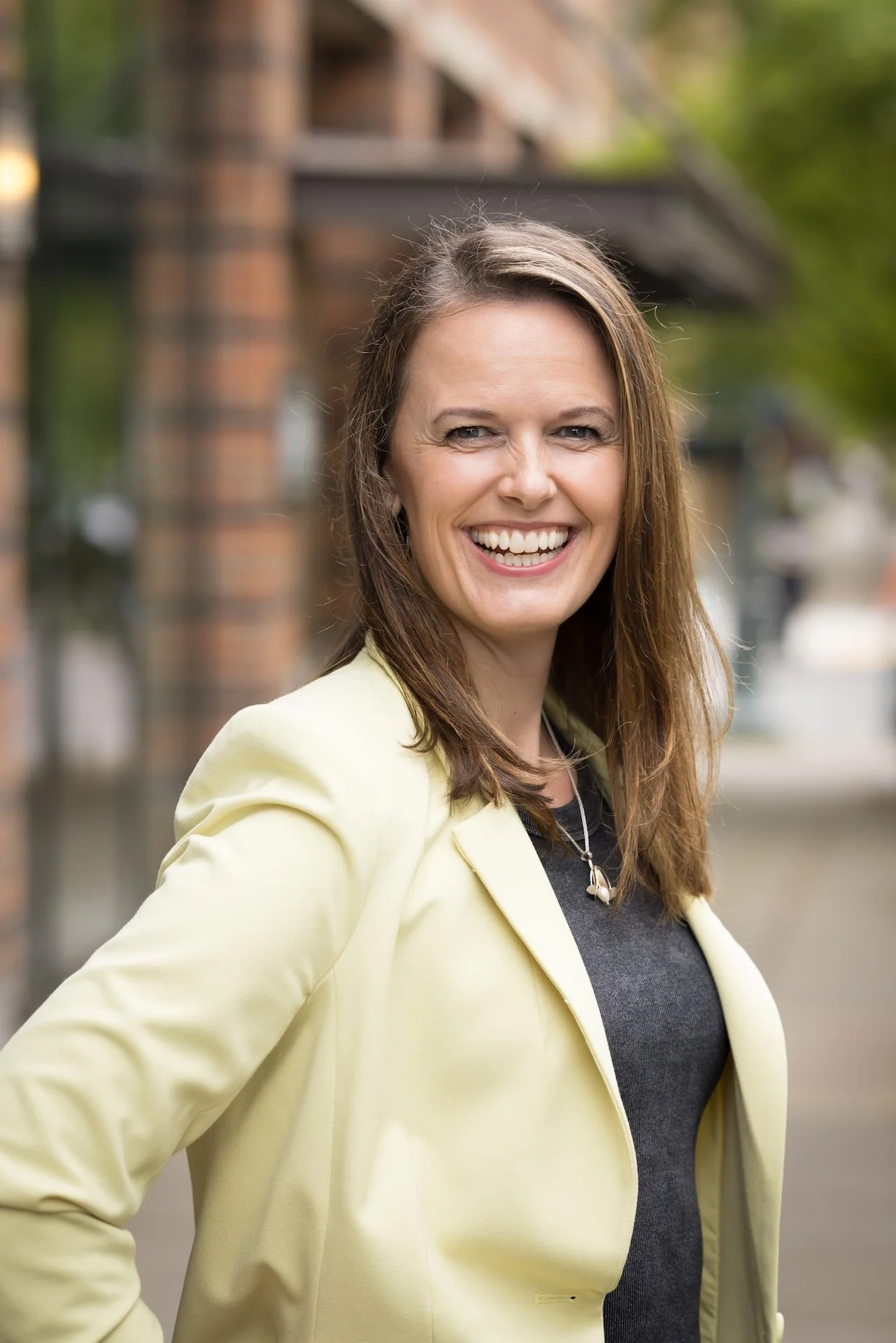
About Ingrid Johnston, LMFT, MDFT
Spokane religious trauma therapist
I'm a Licensed Marriage and Family Therapist providing religious trauma therapy to clients throughout Washington State, including Spokane. I've been working with individuals and couples since 2014, with specialized training in trauma, somatic therapy, and religious deconstruction.
I hold a Master of Science in Marriage and Family Therapy and advanced certification in Medical Family Therapy and Collaborative Medicine from Seattle Pacific University. My approach integrates EMDR, somatic therapy, and Emotionally Focused Therapy (EFT), evidence-based modalities specifically effective for religious trauma and complex PTSD.
Beyond my clinical training, my work is informed by my own lived experience. I grew up immersed in traditional Christian faith, and I've navigated my own path through deconstruction, chronic pain, somatic healing, and decades of mindfulness and meditation practices. I understand what it's like to question everything you were taught to believe.
Licensed Marriage and Family Therapist: Washington State License #LF61033631
Get In Touch
Contact Ingrid
Please complete the form, and I will be in touch within 48 business hours.
Office and mailing address:
19803 North Creek Parkway, Suite 205
Bothell, WA 98011
In-person in Bothell & online across Washington