
Counseling For Religious Trauma, Purity Culture, Spiritual Abuse, & Faith Deconstruction
Religious Trauma Therapy in Vancouver, Washington

The Church Used to Be Your Foundation
You live in a community where church is woven into everything. Your neighbors go. Your kids' friends' families go. The assumption is that you go too.
Maybe you still do, because the alternative feels impossible. Leaving church in Southwest Washington doesn't just mean losing your faith. It means losing your social network, your kids' friendships, maybe even your marriage.
Or maybe you've already stopped going, and you're living with the fallout. The concerned texts from people "checking in." The invitations that have dried up. The way conversations shift when you walk into the room. You're finding out who your friends really were.
Vancouver and Clark County aren't like Seattle. This isn't a secular bubble where nobody talks about religion. This is a place where faith is the default, where "what church do you go to?" is a normal getting-to-know-you question, where your doubts make you the odd one out.
The isolation of religious trauma hits differently here. You can't just blend into a secular crowd. You're surrounded by reminders of what you've lost and what you're questioning.
Maybe the crack started when your pastor told the congregation how to vote. Maybe it was watching leadership close ranks around someone accused of abuse and call it "protecting the ministry." Maybe it was quieter. The pastor preaching about humility from a stage with a light show. The way women were praised for their "servant hearts" but never handed a microphone. The prayer requests that were really gossip with a spiritual veneer. One contradiction after another, until you couldn't keep pretending you didn't notice.
Or maybe it hit closer to home:
Your child came out, and your church made clear they weren't welcome
You went through a divorce and felt the judgment instead of support
You experienced something traumatic and were told to pray harder, forgive faster, trust God's plan
You started asking questions and realized questions weren't welcome
You can't go back to believing the way you used to. But you also can't escape the environment that shaped you. Your kids' school friends still invite them to VBS. Your neighbor still asks if you've "found a church home yet." It's right outside your door.
Religious Trauma Goes Deeper Than What You Believe
When you leave or question your faith in a place like Vancouver, you're not just changing your beliefs. You're losing your entire framework for community.
The church wasn't just where you worshipped. It was where your kids had friends. Where you had couples to do life with. Where you belonged. Where you had a built-in answer to "what do you do on Sundays?" and "what do you believe?" and "what's the meaning of life?"
Now you're rebuilding everything from scratch, in a community that doesn't have a lot of secular infrastructure to catch you.
For Vancouver clients, religious trauma often shows up as:
Hypervigilance about being "found out." You're constantly monitoring what you say, who might be listening, whether someone will report back to your spouse or your parents or your former church friends. You feel like you're living a double life.
Grief that has nowhere to go. You're mourning the women from your small group who used to text you every day and now don't. You're mourning the version of yourself who had answers to the big questions, who knew exactly what happened after death, who had a built-in reason for suffering. And you can't process any of it with the people around you, because they're still in it. Some of them think you're the problem.
Fear of what leaving fully would cost. Your marriage might not survive. Your parents might cut you off. Your kids might lose their friends. The stakes feel impossibly high, so you stay stuck in limbo.
Guilt that won't quit. Every time you miss church, every time you let your kids skip, every time you think something you were taught was sinful, the shame floods in. You don't believe anymore, but your nervous system hasn't gotten the update.
Loneliness even when you're surrounded by people. You can't be honest about where you are. Small talk at school pickup or neighborhood barbecues requires you to perform a version of yourself that doesn't exist anymore.
Physical symptoms you've never connected to church. Chronic tension in your shoulders, insomnia, chronic pain that isn’t explained by a diagnosis.
If you grew up in purity culture, the effects show up in your body.
A survey of 20,000 married Christian women by researcher Sheila Wray Gregoire and colleagues found that 22.6% reported vaginismus or another form of sexual pain that makes penetration painful or impossible. That's compared to an estimated 5-17% in the general population. The obligation message, the idea that your husband's needs come first and your body exists to serve, gets stored physically.
You might freeze when your partner initiates. You might go through the motions and feel nothing, or feel pain you've never told anyone about. You might not know what you actually want, because you were taught that wanting was the problem. You might feel like your body has never been fully yours, that it belonged to your future husband before you even met him, then to your actual husband, and somewhere in there you lost track of your own desire entirely.
You can read more about how I approach religious trauma and faith deconstruction work, including what to expect in sessions and who this work is for, on my religious trauma therapy page.

Religious Trauma Therapy in Vancouver That Goes Beyond Intellectual Processing
I know the world you're navigating because I came from it, too.
I grew up immersed in traditional Christian faith. I understand what it means to have church be your entire social world. And I understand how terrifying it is to question that when everyone around you still believes.
You won't need to explain what it's like to be the only one with doubts at a small group. Why you can't just "find a new church." What it means when your spouse says they're scared for your soul. I already get the specific pressures of being in a religious community while your faith is crumbling.
My role isn't to tell you what to believe or what to do about your marriage or your church attendance. My job is to help you find solid ground inside yourself so you can make those decisions from a place of clarity instead of fear.
We work with your body, not just your thoughts
I use EMDR (Eye Movement Desensitization and Reprocessing), somatic therapy, and Emotionally Focused Therapy (EFT). These aren't talk-therapy-only approaches where we just analyze what happened. They work with what your body is still doing in response to what happened.
That means the way your chest tightens when you drive past your old church. The nausea that hits when your mother-in-law brings up Sunday service. The guilt that floods your whole body, not just your mind, when you let your kids sleep in on a Sunday. The jaw you've been clenching since you were a deacon's wife, a worship leader, a pastor's kid, whatever role required you to hold it all together.

Specialized Support for Vancouver Clients
Going Through Faith Transitions While Still in a Religious Community
Many Vancouver clients are still attending church, still married to a believer, still embedded in a community where faith is the default and leaving carries real consequences: church gossip, fractured family relationships, a social life that evaporates overnight.
I work with people in this in-between space. We focus on helping you figure out what you actually believe versus what you were taught to believe, so you can navigate Sunday mornings and family dinners and your kid's questions from a steadier place, even while your circumstances are still complicated. You don't have to have it all figured out to start.
Your Marriage Is Struggling Because of Your Faith Shift
When one partner questions or leaves the faith in a community like Clark County, the marriage often becomes the place where all the pressure lands. Your spouse is terrified you're going to hell, or that you're going to take the kids away from church, or that the person they married doesn't exist anymore. You feel trapped between being honest and keeping your family intact. Every conversation about church or the kids or holidays turns into the same fight.
I'm trained in Emotionally Focused Therapy for couples. We get underneath the surface arguments, the ones about whether the kids go to youth group, to the fear and grief driving them. So you can hear that your spouse is scared without taking it as an attack. So you can share where you are without triggering a panic response. So you can find the things you still share, even if God isn't one of them, and build forward from there..
Learn more about EFT couples therapy for mixed-faith marriages here.
Purity Culture Recovery
Purity culture is pervasive in Southwest Washington churches. If you grew up hearing that your virginity was a gift for your future husband, that boys couldn't control themselves so it was your job to dress modestly, that your worth was tied to your sexual history, those messages didn't just disappear on your wedding night.
The damage shows up as shame during sex, disconnection from your own body, pain during penetration, confusion about what you actually want, and a deep inability to trust your own desires. I use somatic therapy to address this at the body level, because purity culture didn't just give you bad ideas. It trained your body to shut down, clench, go numb, or perform. We work with those physical patterns directly, not just talk about them, so you can actually feel present in your body and in your intimate life.

In Religious Trauma Therapy, I’ll Help You:
Make decisions about church, marriage, and family from clarity instead of panic. Right now every choice feels like it carries eternal consequences. We work toward a place where you can tell your spouse you don't want to go to church this Sunday and have it be a conversation, not a crisis. Where you can answer your kid's bedtime question about God honestly instead of reciting the answer you were given.
Stop your body from reacting like you're still in danger. The guilt that floods you when you skip church, the shame spiral when you think something you were taught was sinful, the hypervigilance at school pickup wondering who knows and who's judging — these aren't moral failures. They're your nervous system running old software. We update the software. You get to sit through brunch with your in-laws without your stomach dropping when someone brings up the sermon.
Grieve what you lost without it swallowing you. Leaving faith, or even just questioning it, means losing people. The couple you used to have dinner with every Friday. The mentor who shaped your twenties. The version of the world where everything had a reason. We make room for that grief so it stops ambushing you. So the next time someone from your old small group texts, you can read it and respond without spiraling for the rest of the afternoon.
Build a life outside the church bubble that actually feels like yours. Right now "community" means church, or it means nothing. We work toward a place where you can say yes to the neighborhood book club even though Wednesday nights still feel like they should be for Bible study. Where you can make a friend who doesn't share your theology and let that be fine.
Get your marriage through a faith shift without losing each other. When one of you stops believing and the other doesn't, every conversation becomes a landmine. We get underneath the arguments about church attendance and the kids' baptism to the actual fear: that you're losing each other. So you can disagree about God and still eat dinner together. So you can talk about what scares you without it turning into a four-hour fight that ends with someone sleeping on the couch.
Reclaim your body and your sexuality from purity culture. So that you can be touched without bracing. So that you can want sex, not just agree to it. So that you know what you enjoy without a voice telling you you're dirty for enjoying it. So that intimacy becomes something you experience instead of something you perform.
Live without the constant terror that you're making an eternal mistake. The "what if I'm wrong" fear is one of the last things to go, and one of the most paralyzing. We work with it directly, at the body level, not just intellectually. The goal is that you can enjoy a Saturday morning at the Vancouver Farmers Market with your kids without a voice in the back of your head whispering that you're damning your family.
Telehealth Religious Trauma Therapy for Vancouver Residents
I provide telehealth religious trauma therapy to clients throughout Vancouver, Washington and all of Clark County. Whether you're in downtown Vancouver, Camas, Ridgefield, Washougal, Battle Ground, or anywhere else in the area, you can work with me from home.
For Vancouver residents navigating faith transitions, telehealth offers privacy. In a tight-knit community where everyone seems to know everyone, you don’t have to worry about running into someone from church in a therapist’s parking lot or waiting room. You can do this work from the comfort of your own home.
Serving Vancouver and Clark County
Including Camas, Washougal, Ridgefield, Battle Ground, La Center, Woodland, and surrounding areas.
Schedule Your First Session
Schedule Your First Session
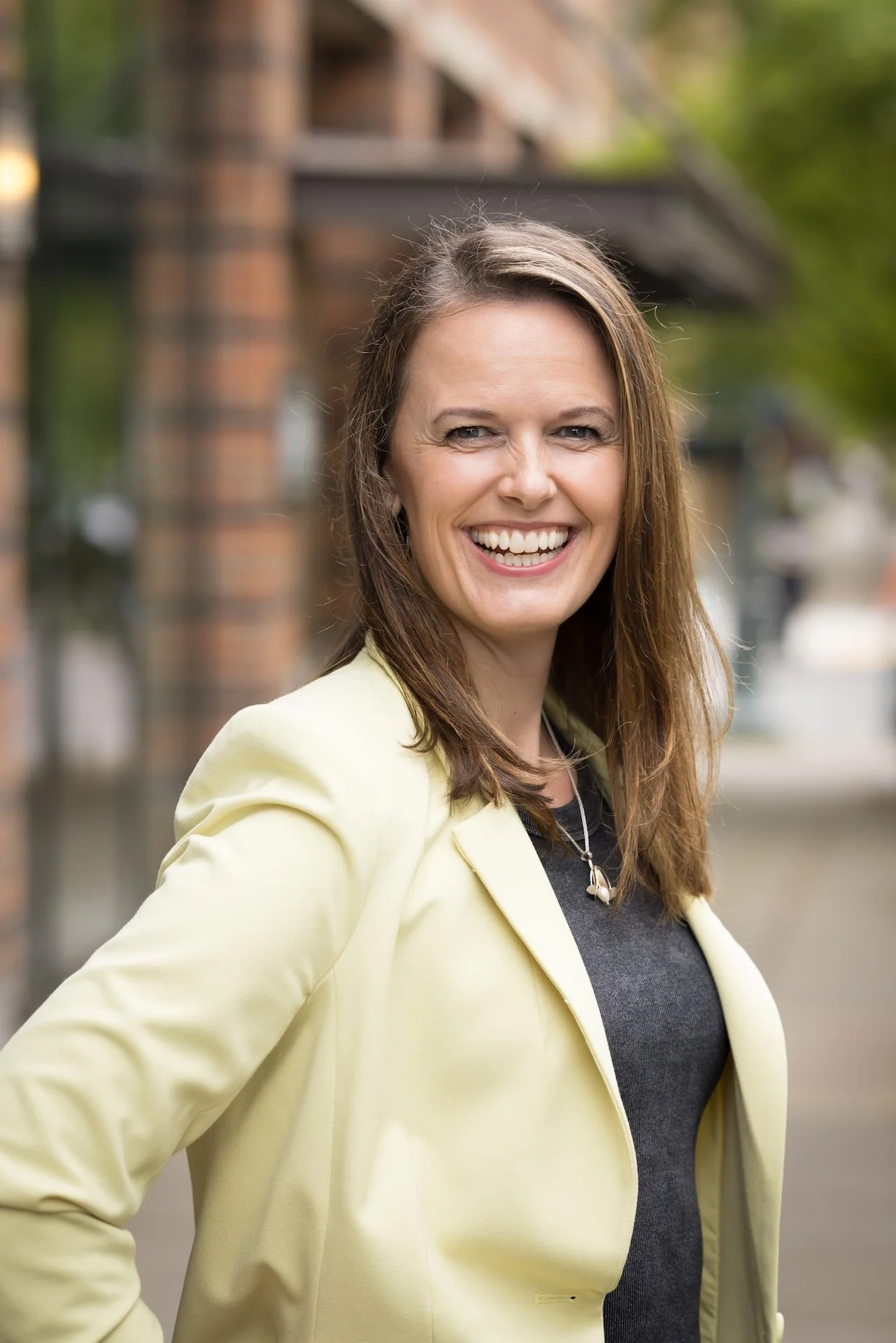
About Ingrid Johnston, LMFT, MDFT
Vancouver religious trauma therapist
I’ve been working with individuals and couples since 2014, with specialized training in trauma, somatic therapy, and faith transitions. I hold a Master of Science in Marriage and Family Therapy and advanced certification in Medical Family Therapy and Collaborative Medicine from Seattle Pacific University.
My approach integrates EMDR, somatic therapy, and Emotion-Focused Therapy (EFT), evidence-based modalities specifically effective for religious trauma and complex PTSD. I’ve completed over 100 hours of specialized training in trauma treatment and body-based healing.
Beyond my clinical training, my work is informed by my own lived experience. I grew up immersed in traditional Christian faith. I’ve navigated my own path through chronic pain, somatic healing, and decades of mindfulness and meditation practices. I understand what it's like to rebuild trust in your body and intuition after being taught they couldn’t be trusted.
I’m a member of the American Association for Marriage and Family Therapy (AAMFT) and the Washington Association for Marriage and Family Therapy (WAMFT).
Licensed Marriage and Family Therapist: Washington State License #LF61033631
Get In Touch
Contact Ingrid
Please complete the form, and I will be in touch within 48 business hours.
Office and mailing address:
19803 North Creek Parkway, Suite 205
Bothell, WA 98011
In-person in Bothell & online across Washington